
In my most recent article in Fast Company, I discuss the issue that seems to be a major topic of discussion across traditional and social media: Are we in an AI bubble?
As I examine in this article, while there are many hallmarks of bubbles with what we see today in AI, massive investments in anything AI at high valuations, public market indices at high multiples, etc, the story is more complicated than it appears.
The sheer capabilities of this technology to drive higher productivity, something that we’re starting to see in the macro data, can pay huge dividends across the economy. That could mean higher GDP growth and more productive research and development, which will result in more economic growth down the line.
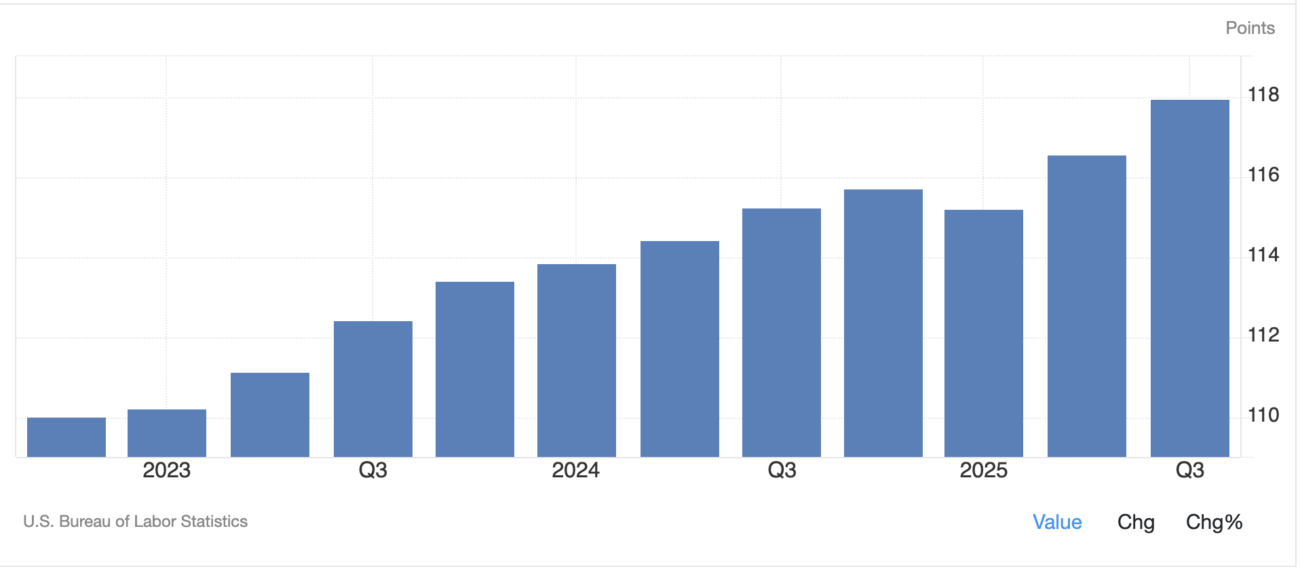
Productivity in the United States increased to 117.97 in the third quarter of 2025, an all time high! It had averaged around 60 from 1947 until 2025.
Source: Bureau of Labor Statistics
None of this means that we won’t have to reckon with the short- to medium-term impacts of this technology on the job market. The nature of work will change and we need the government and the private sector to step up and re-skill our workforce. While the short-term displacement will be real, I’m optimistic about the long-term prospects of even more jobs at higher pays.
I discussed these topics in a previous article. We have had dire predictions about mass unemployment due to new technologies at various moments in our history, but each time we have ended up with more jobs created and at higher wages.
Will AI be different? Let the debate begin.
Below is the link to the article on Fast Company.